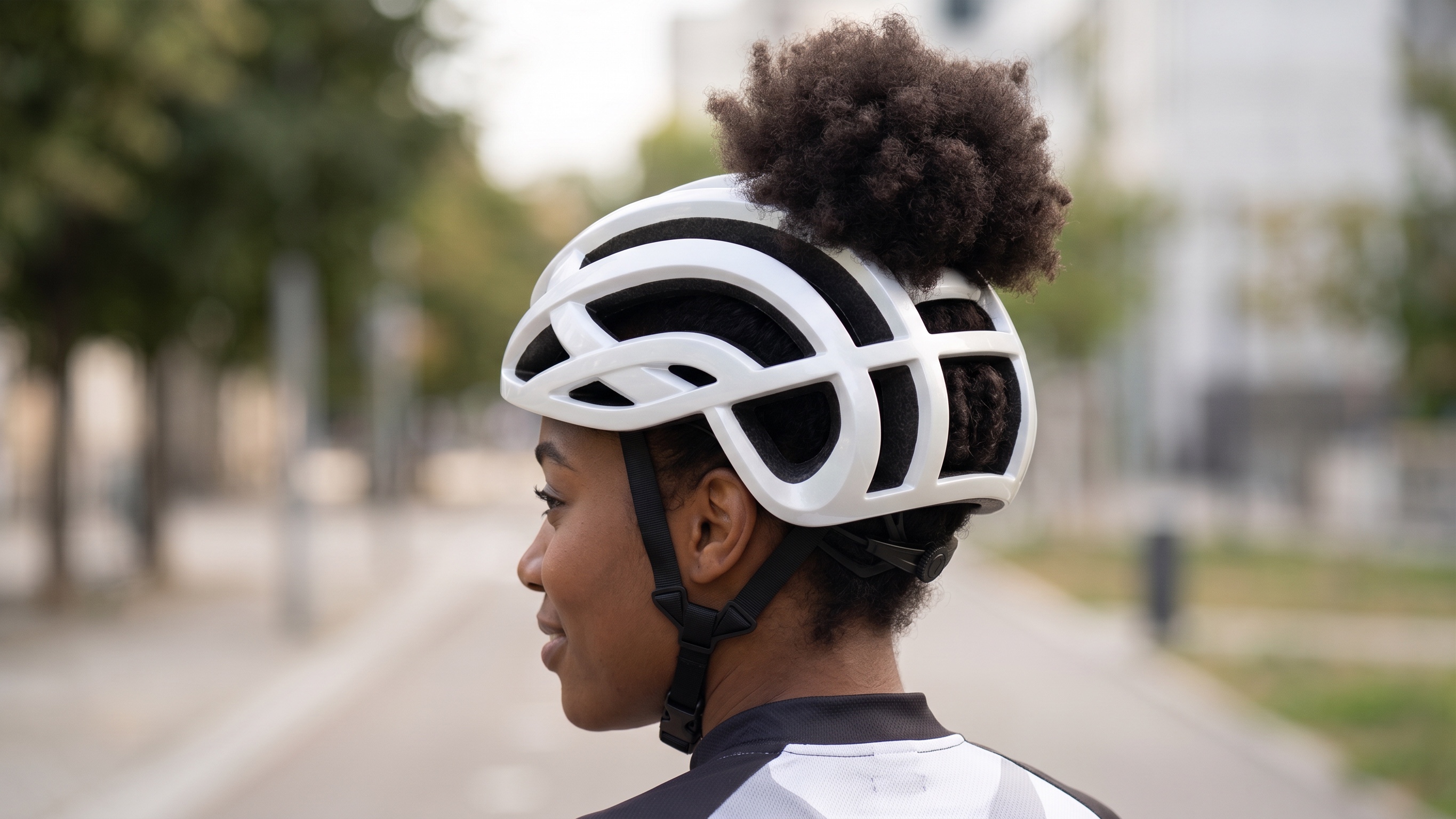
Traditional bicycle helmets are built around a rigid, single-shape shell that doesn't account for different hair volumes, styles, or head shapes.
As a high school student tackling this solo project over six weeks, I wanted to rethink standard helmet design from the ground up. This project aims to create an adaptable fit system and deliver proper protection and everyday comfort for every rider.
INCLUSIVE BIKE HELMET


Jenna Marie Foley is a Philadelphia-based competitive cyclist in her late 20s. She explains how helmet designs fail riders with high-volume, textured hair. A 30 minute interview with her helped me understand her pain points and know what to focus on.
“I am convinced that at no point in any marketing, design, safety testing room was there a person of color or a woman with non straight hair who could say that these helmets do not work and are not inclusive.”
“You could lose your life if your helmet doesn't sit properly: if it is too far forward, if you can't put it on fully around the back.”
“I'm thinking about everybody I know personally who has to either order a helmet one or two sizes too large, or has to wear a helmet improperly just because of their hair or their head covering.”
“People deserve safety and equipment to enjoy the activities and the sports that they love. This does not work for us.”
Understanding the Issue
Impaired Vision
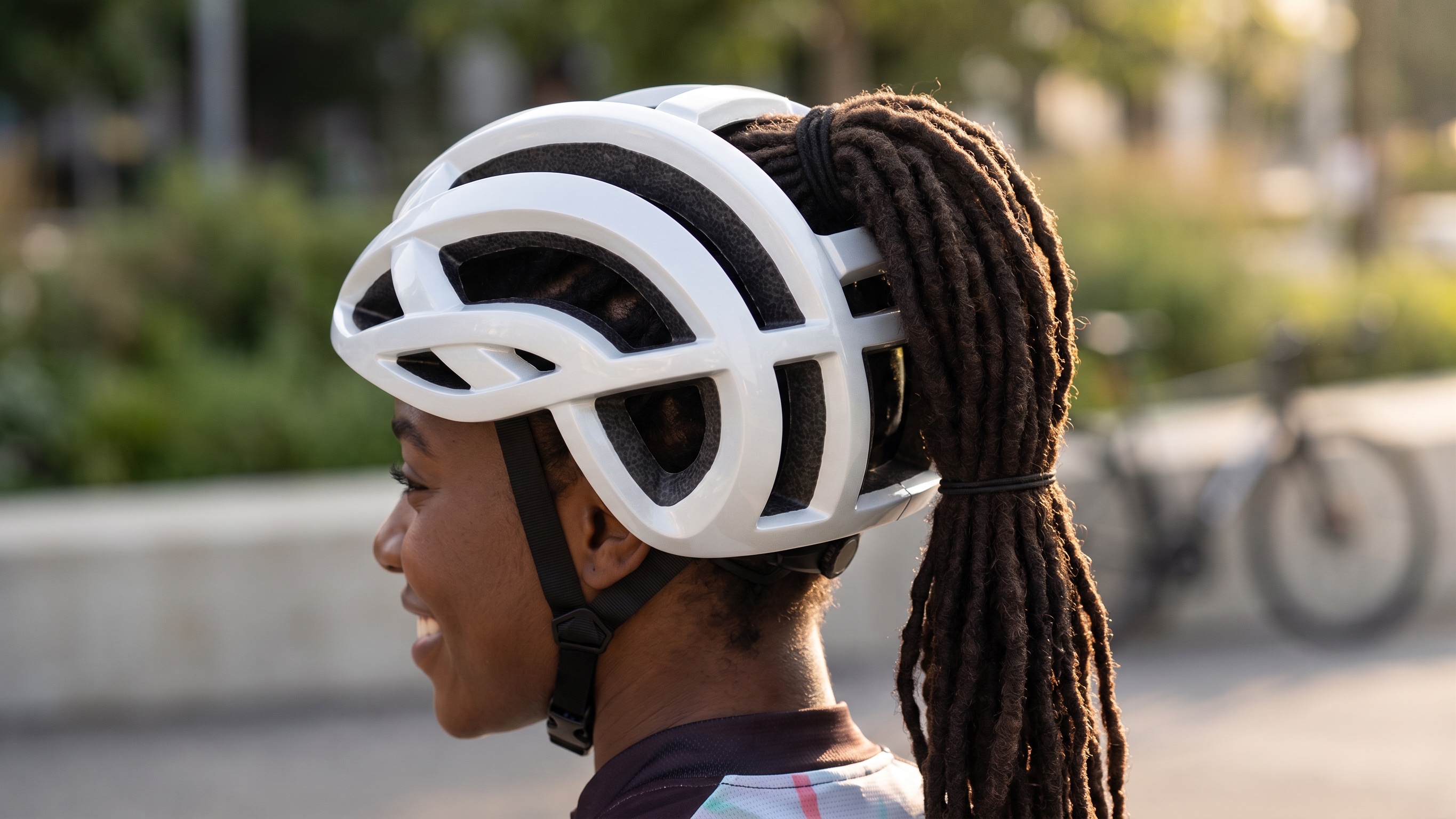
Rear hair bulk shifts the helmet forward, obstructing the upper field of view.
Gaping
Upsizing into larger helmet sizes to fit dense hair creates a dangerous gap between the foam core and the head.
Exposed Area
High-volume hairstyles push the rear rim upward, leaving the base of the skull unprotected.


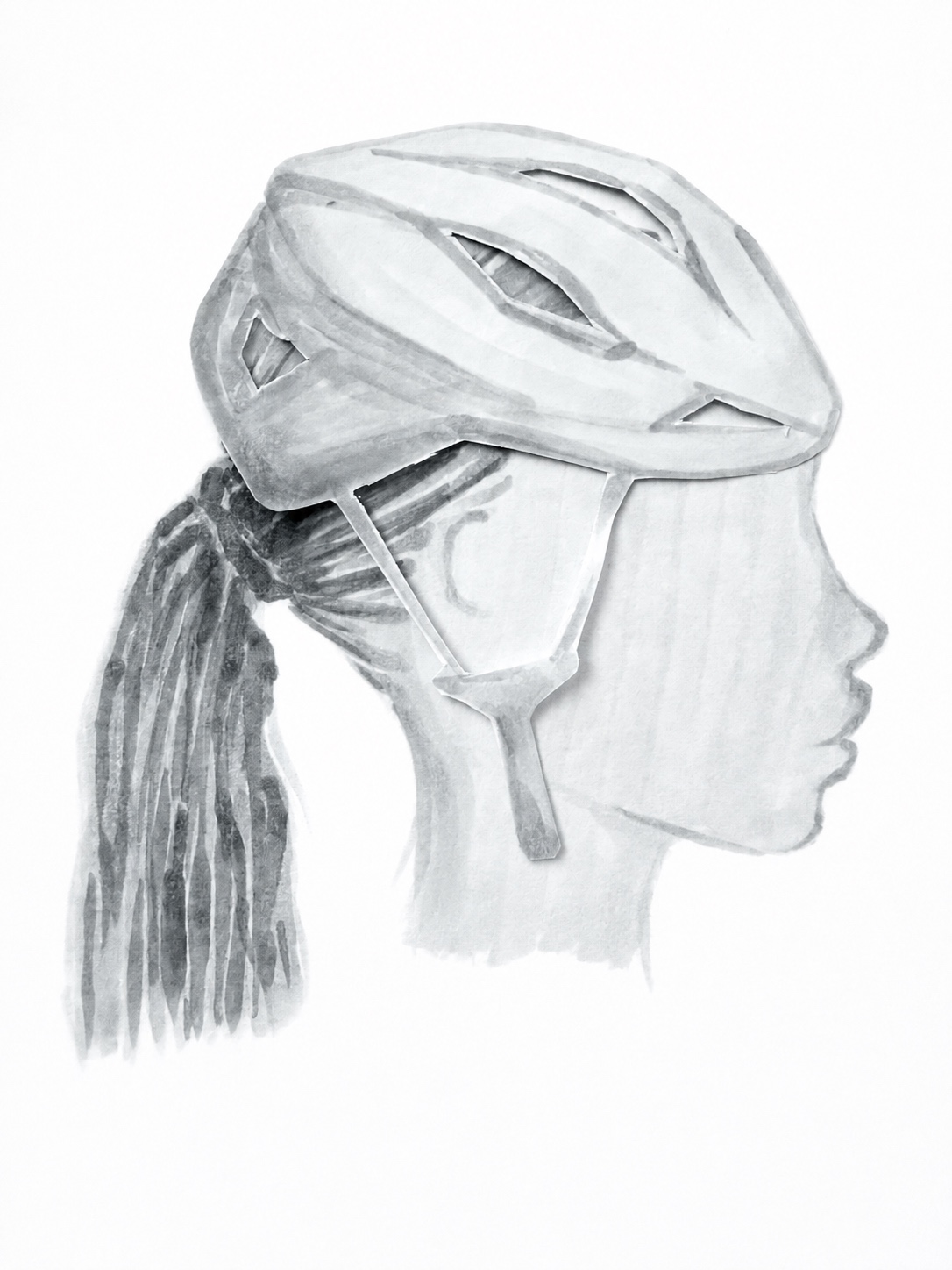

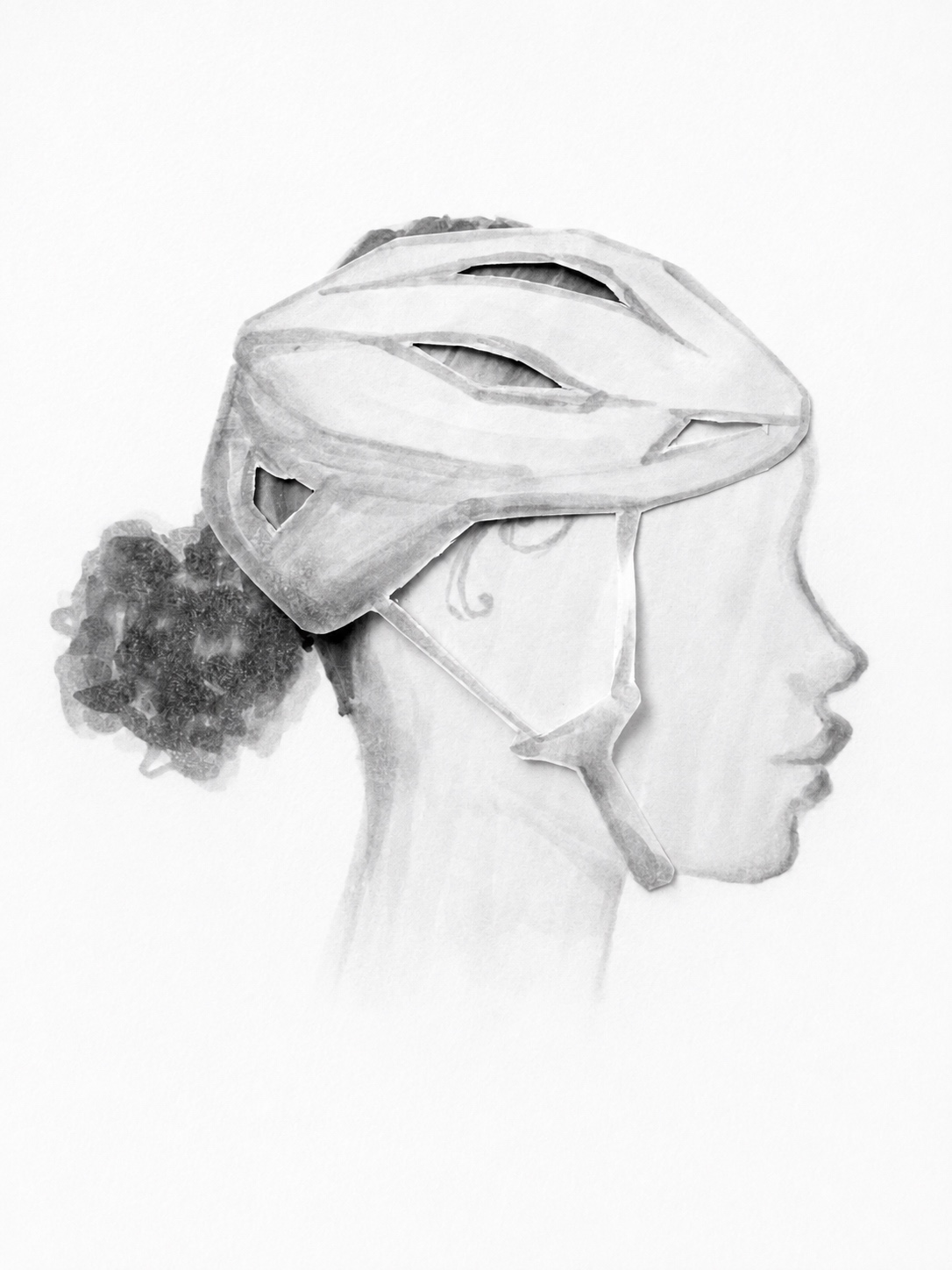
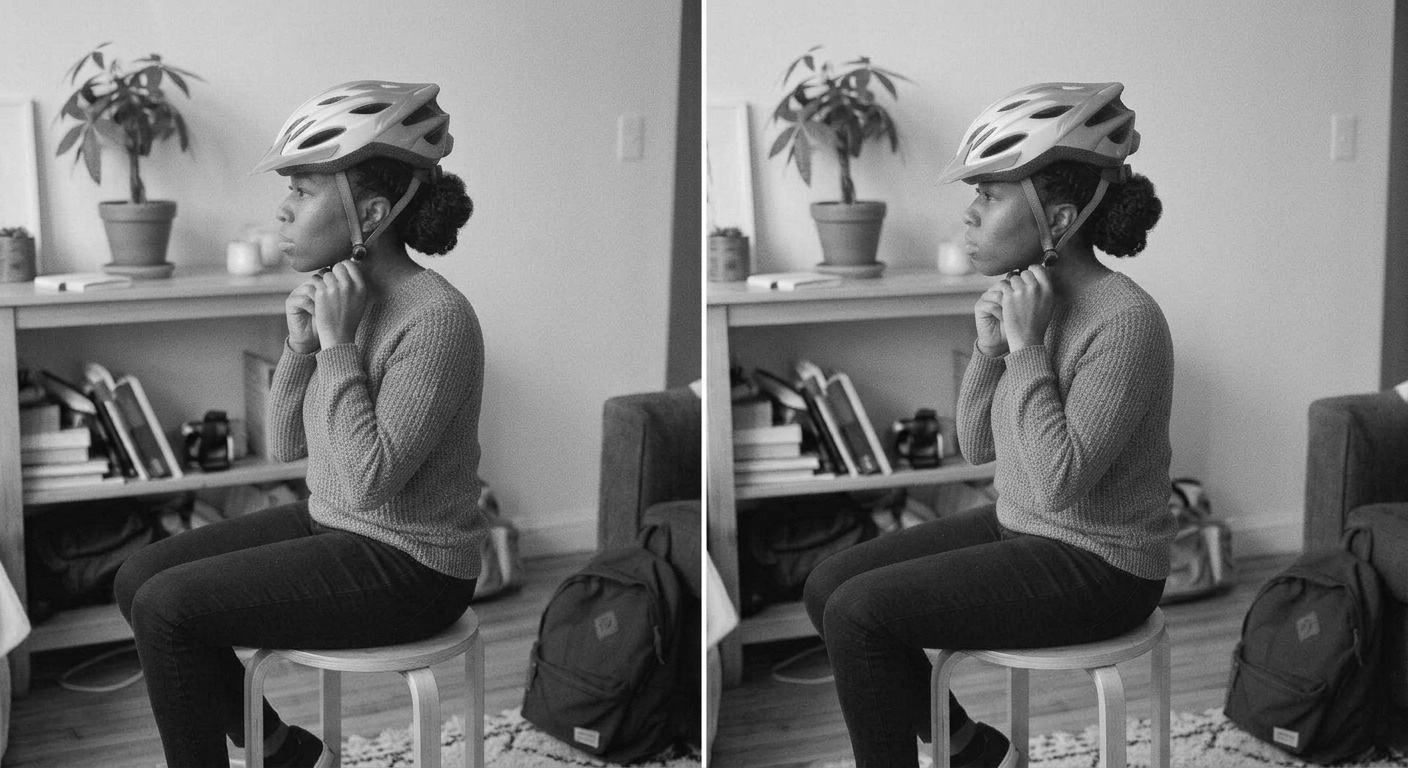
Standard Helmets vs. High-Volume Hair
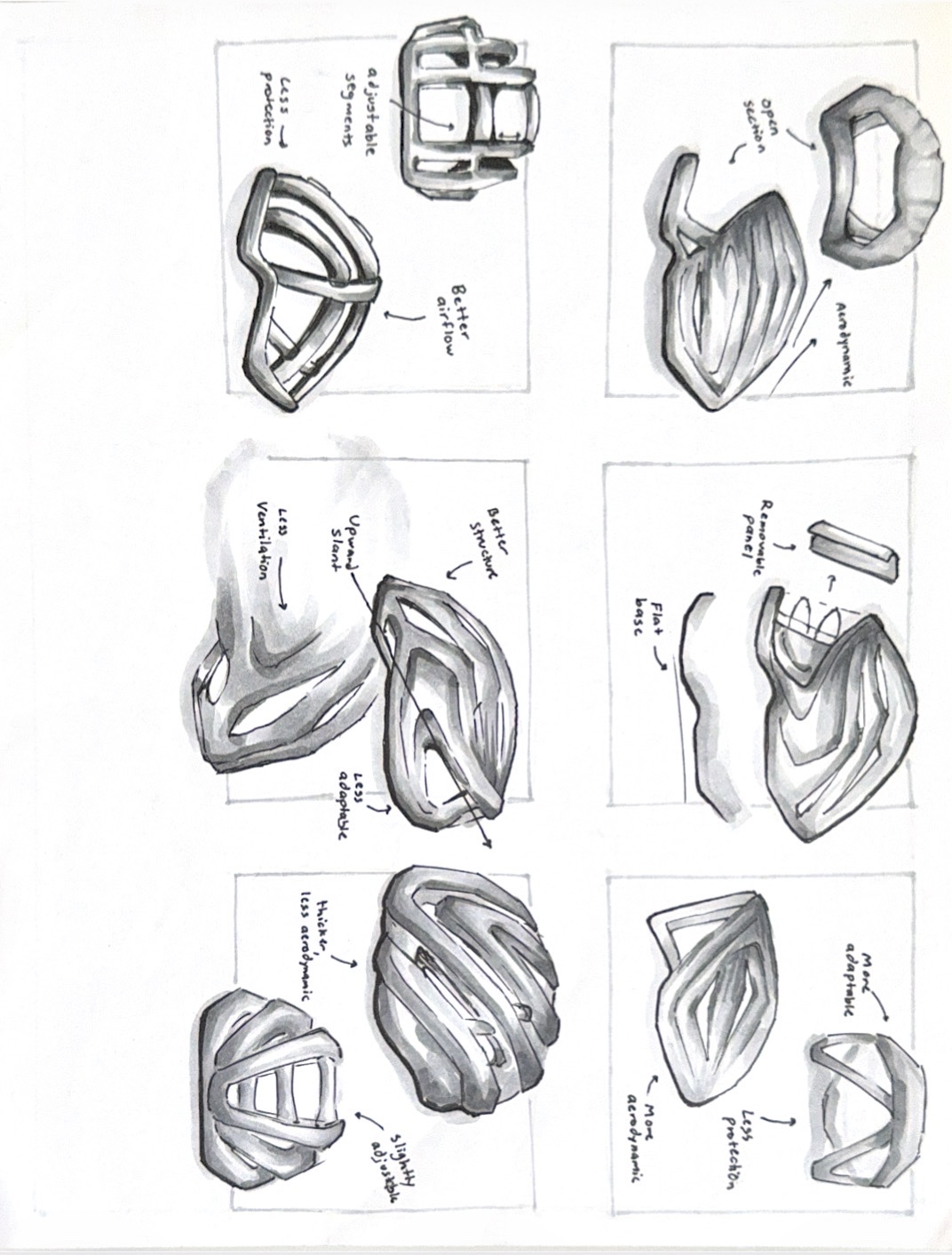



Addressing All Three Issues


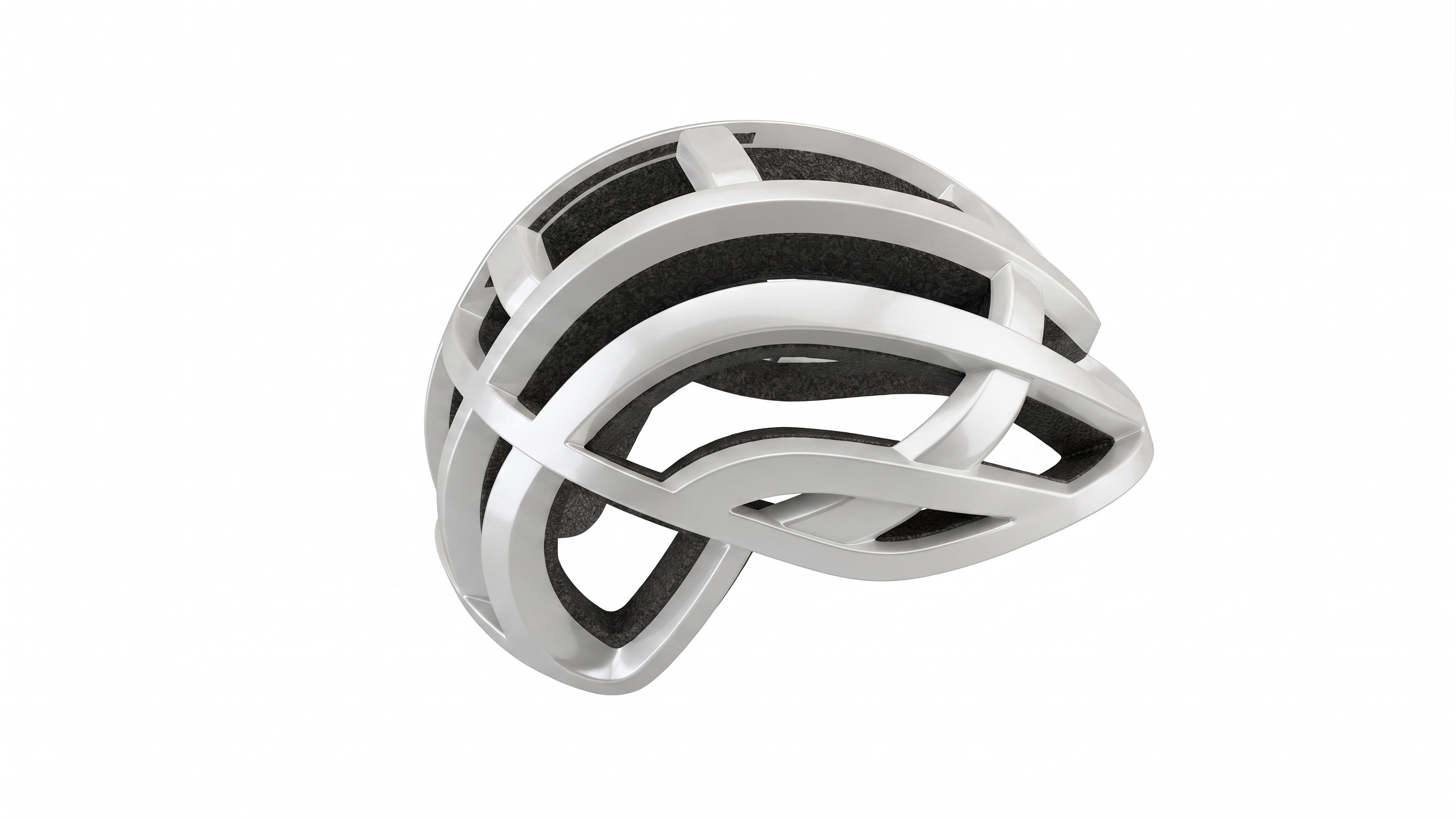
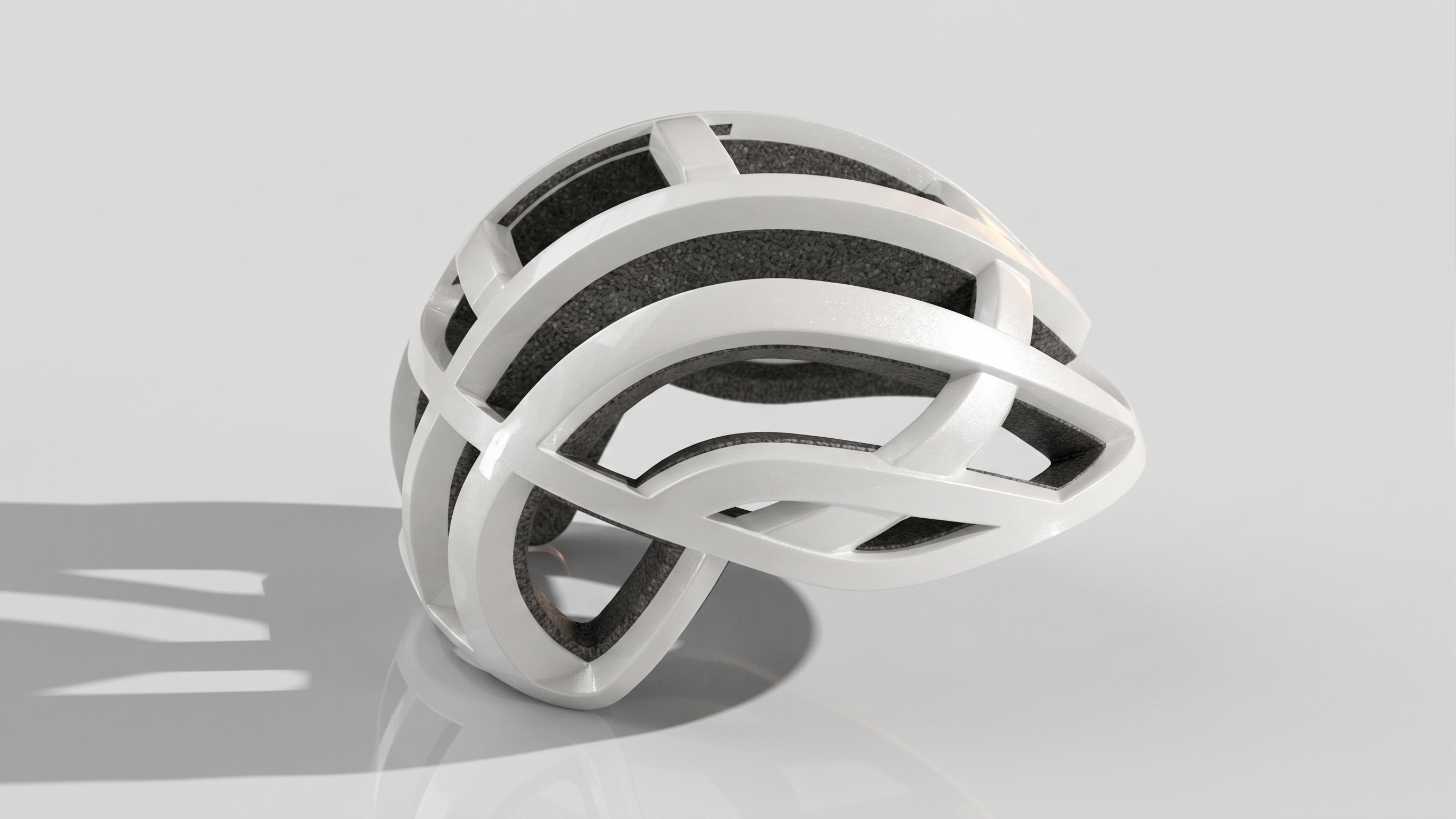
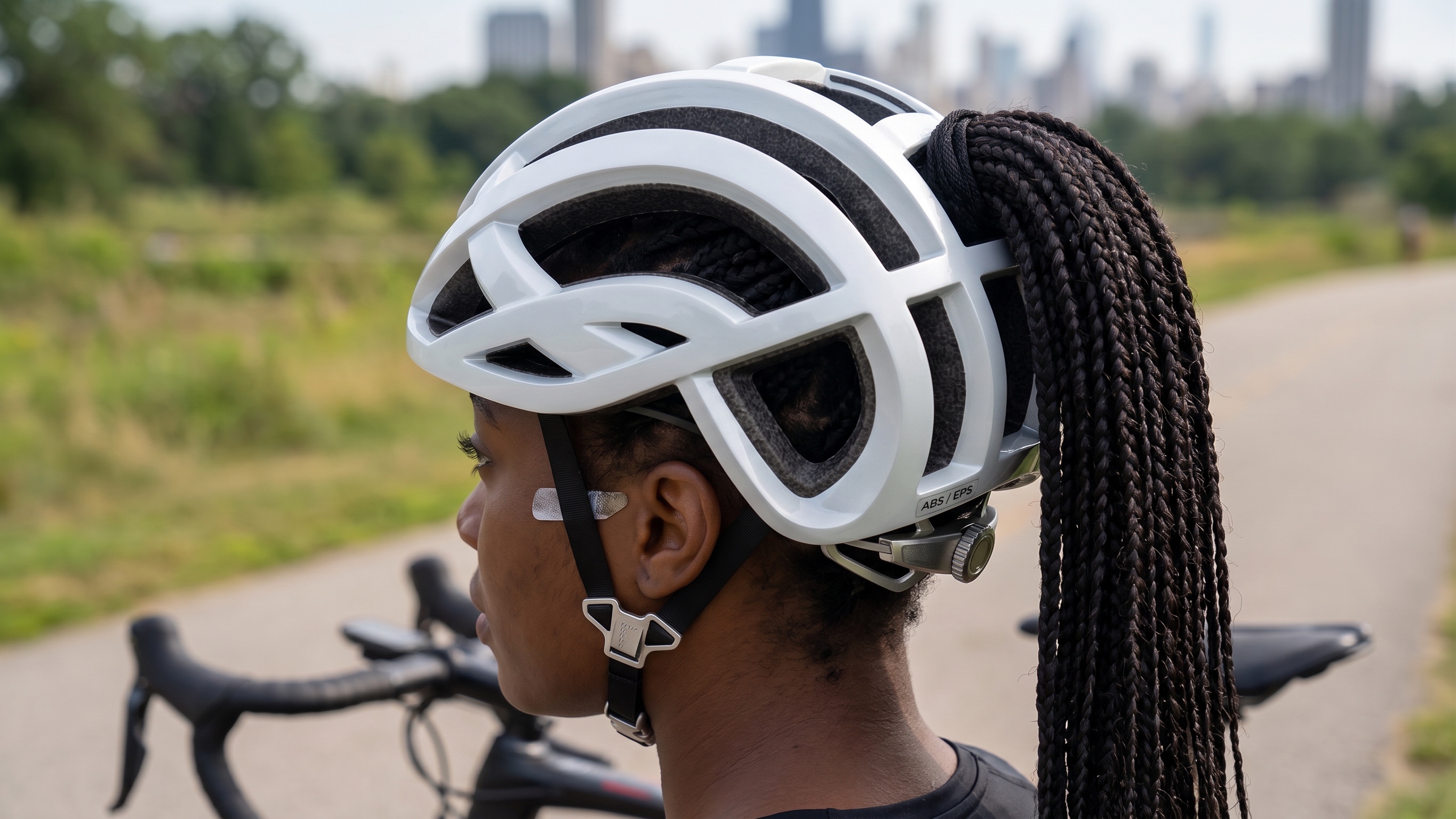
Adjustable segments that lock securely around a bun or ponytail
Window to account for lower hairstyles
Upward slant to improve aerodynamics
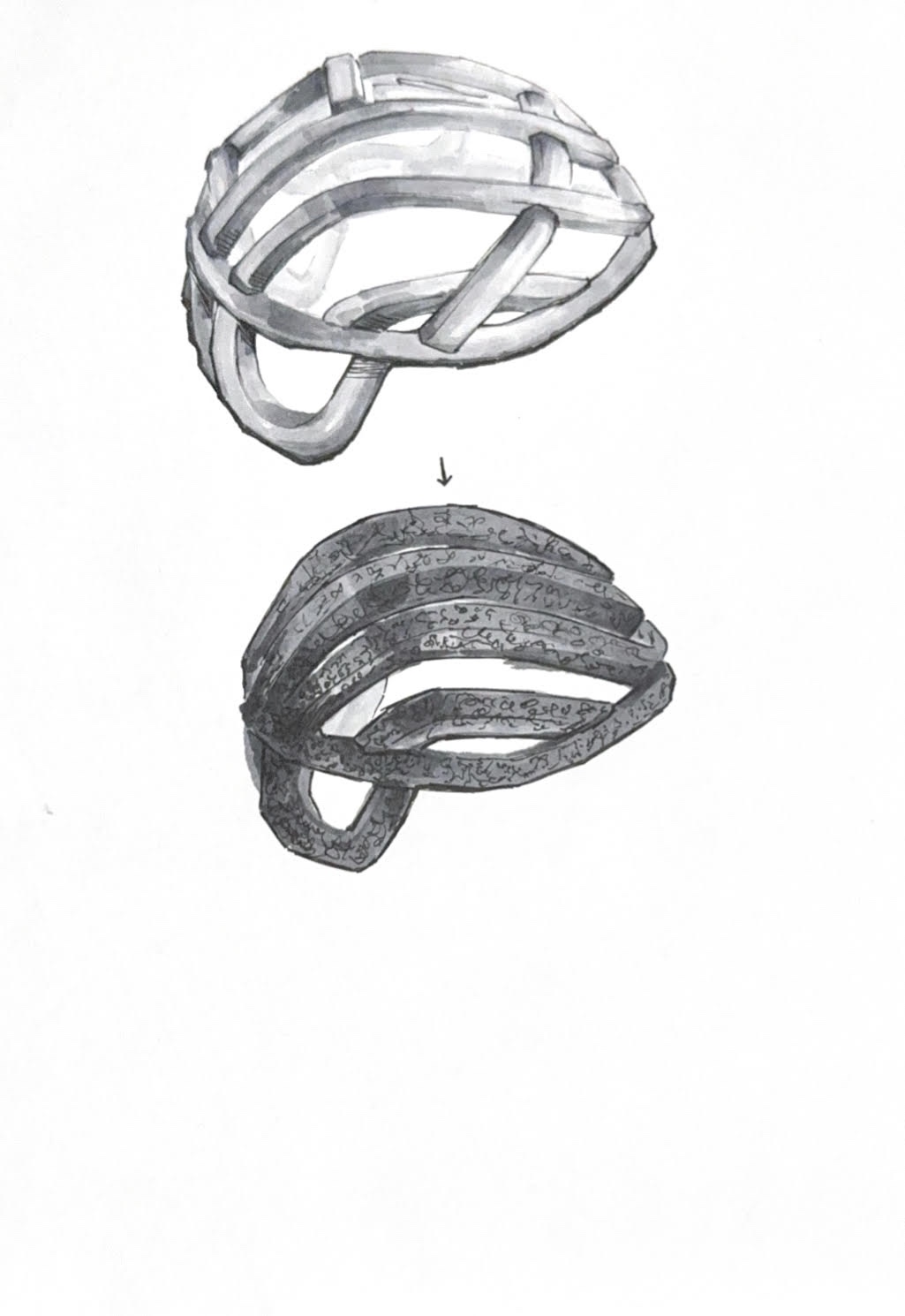
Added casing for strength and stability
Draft angle for removal from mold
Greater thickness for added protection


Foam layer for shock absorbency





Final Design
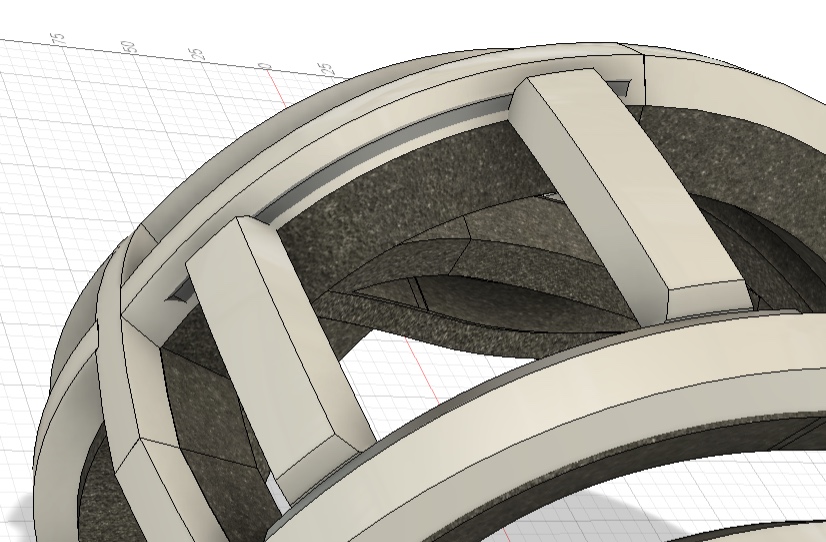

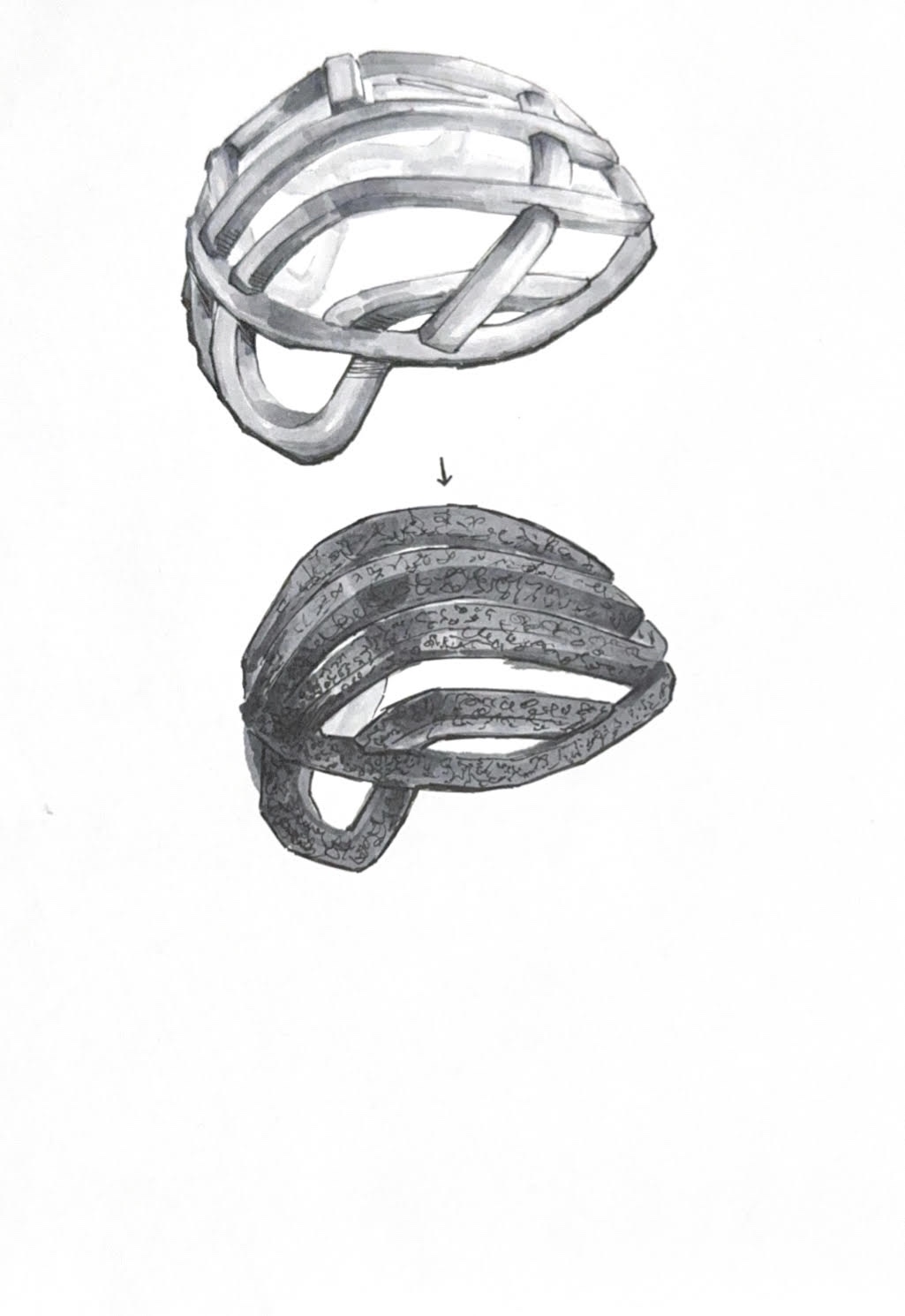

Sliding Mechanism
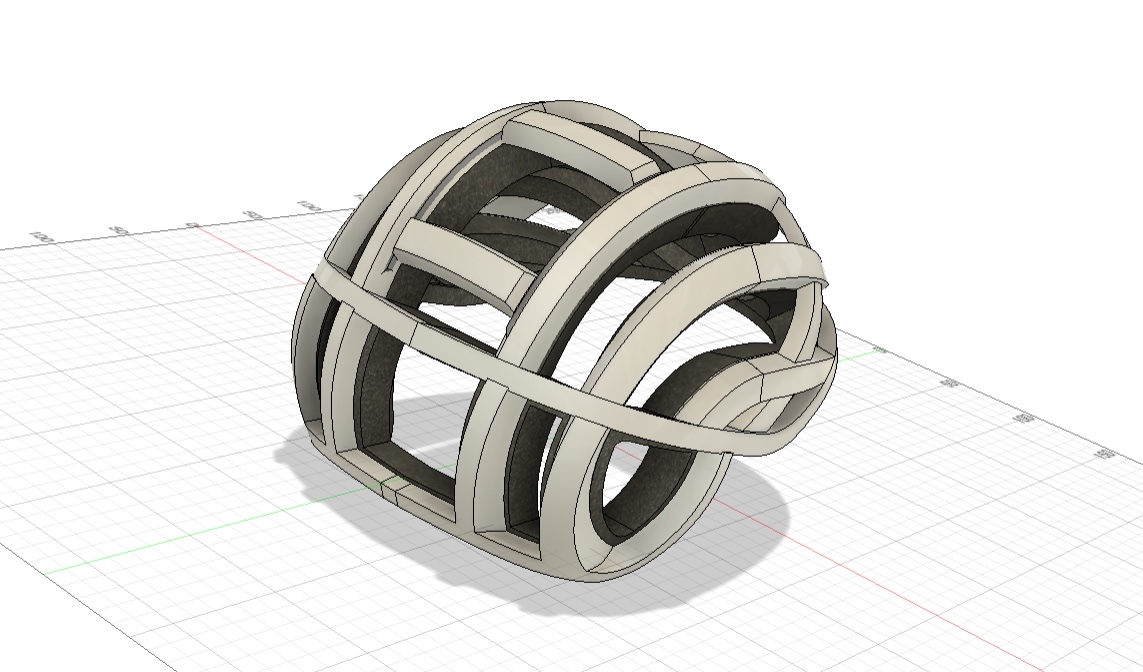
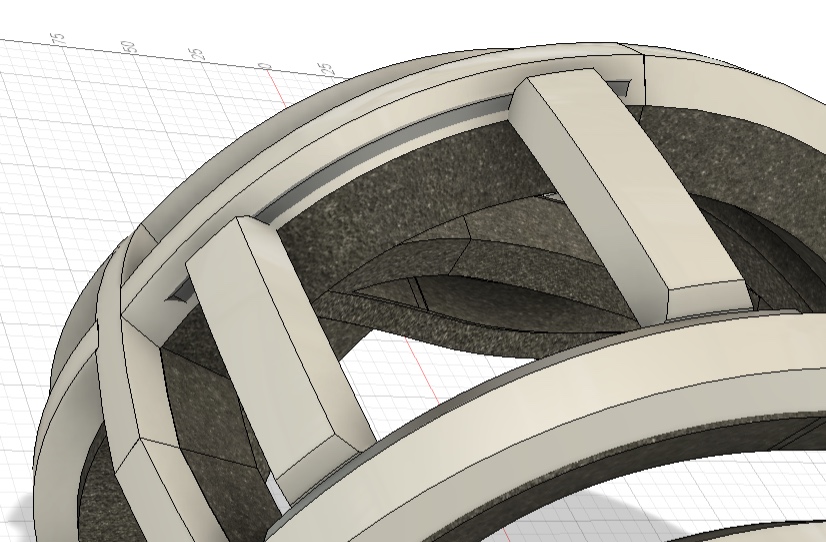
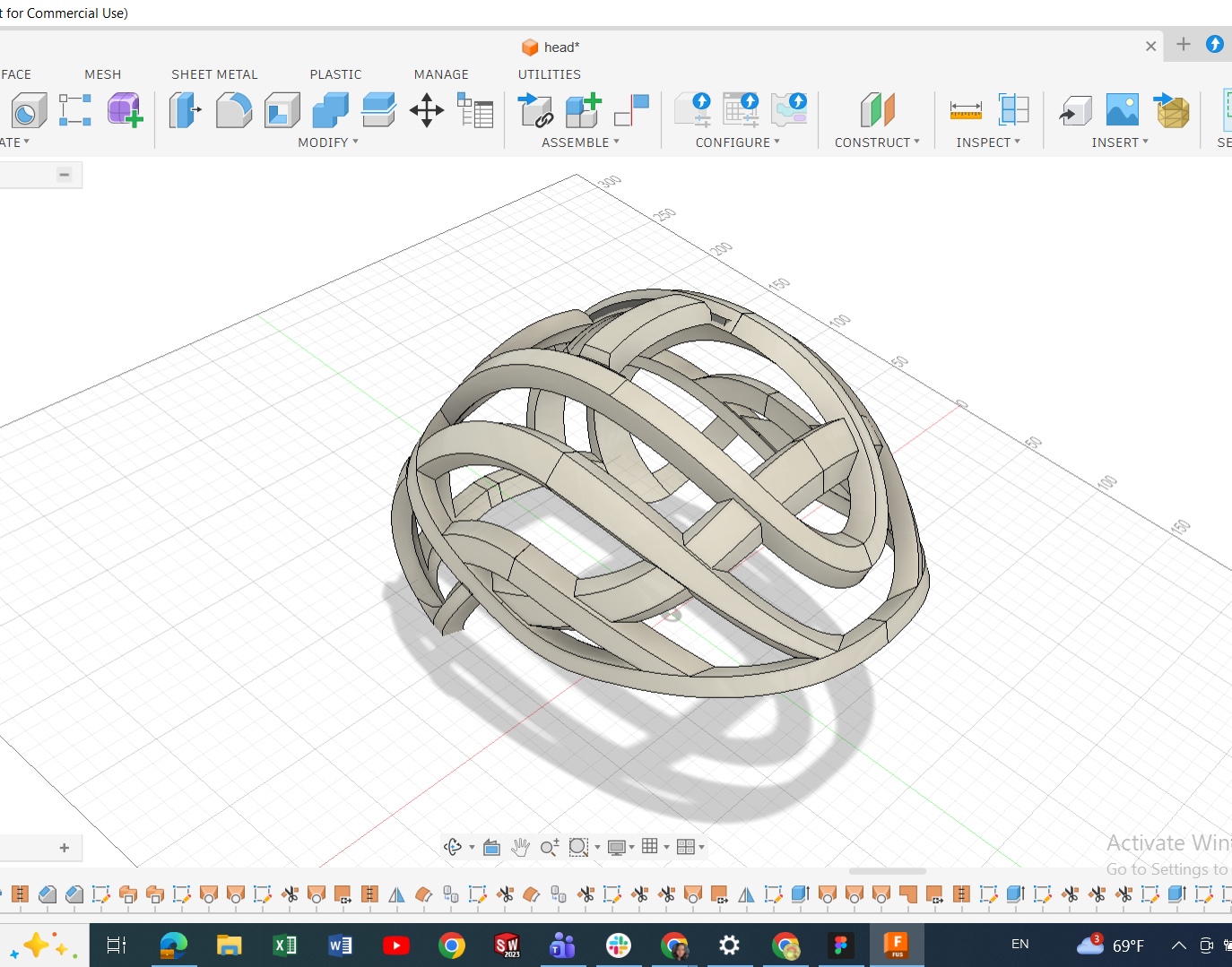
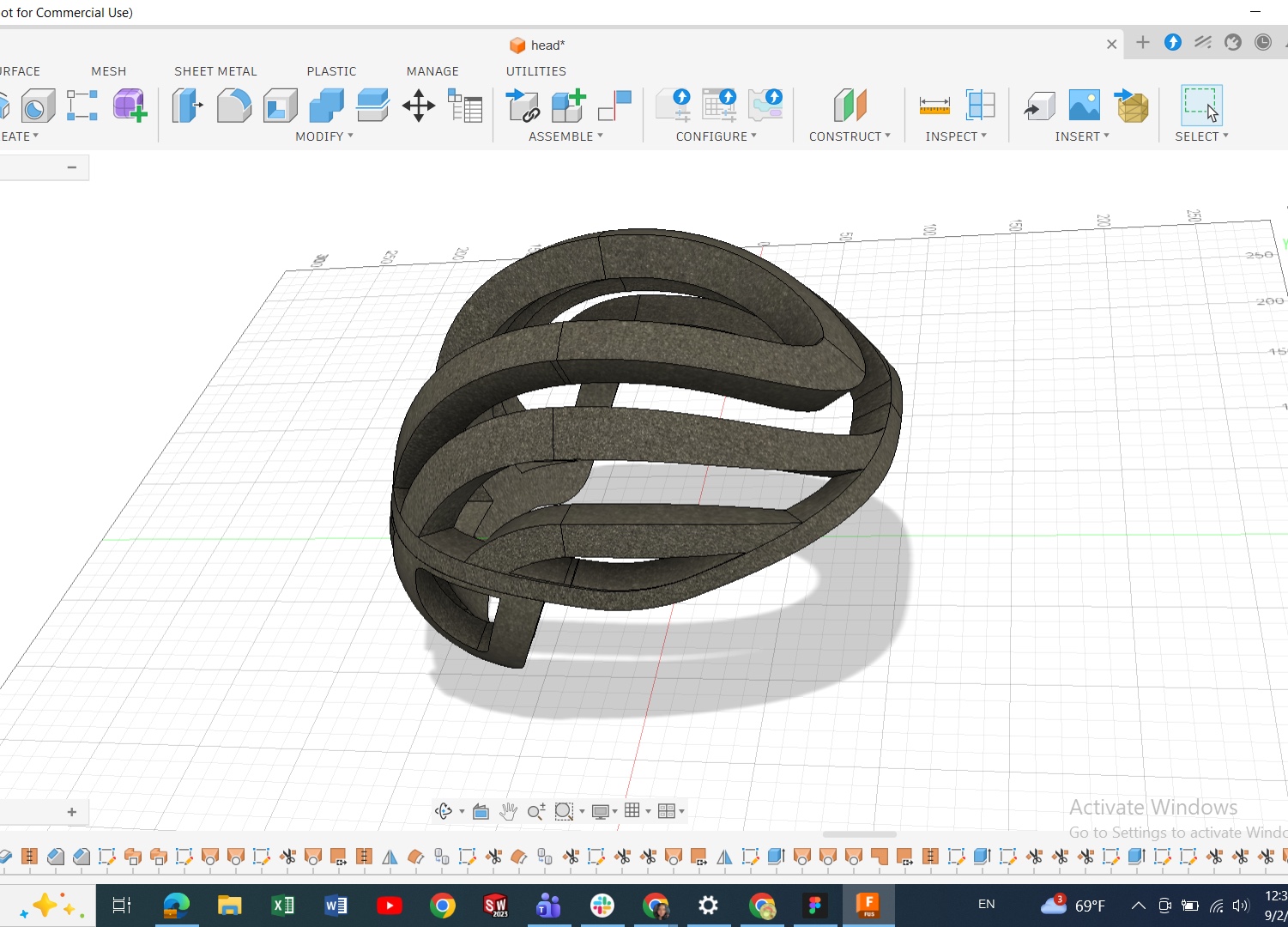
CAD
Transitioning from SOLIDWORKS to Fusion 360 this summer was the perfect excuse to dive deep into advanced surfacing.
I sculpted the helmet’s curves using patches and lofts, but when thickens and chamfers failed, I had to get creative with surface modeling—using stitch to hunt down micro-gaps and bypass software limits.
Turning those open surfaces into clean, watertight solids across a complex timeline was a hurdle that enhanced my CAD skillset.
Project Overview
Watching cyclists struggle to fit high-volume hair into standard helmets made it clear that default design standards leave too many people out. I wanted to prove that inclusive safety gear doesn't have to compromise on performance or form.
Turning repeated CAD failures into a refined model taught me how to push through roadblocks and stay curious. It made me incredibly excited about where inclusive design could go next.